Stretching does not have to mean spending an hour on a yoga mat. A few simple movements added to your daily routine can help you feel more comfortable while sitting, standing, walking, or exercising.
The best stretching plan is one you can follow consistently. Short sessions in the morning, during work breaks, or after physical activity can fit easily into a busy schedule. The routines below focus on gentle, practical stretches for the neck, shoulders, back, hips, and legs.
Basic Stretching Guidelines
Before you begin, keep these simple guidelines in mind:
– Move slowly and avoid bouncing.
– Breathe steadily throughout each stretch.
– Stretch to a gentle feeling of tension, not pain.
– Hold most stretches for 15 to 30 seconds.
– Repeat each stretch once or twice.
– Keep your movements controlled.
– Use a wall, chair, or other stable surface for balance when needed.
If your body feels cold or stiff, begin with a few minutes of easy movement, such as walking around the room or marching in place. Gentle movement helps prepare your muscles for stretching.
Morning Stretching Routine
A short morning routine can help you start the day feeling more mobile. Perform these stretches beside your bed or in an open area.
Overhead Reach
Stand with your feet about hip-width apart. Raise both arms overhead and reach gently toward the ceiling. Keep your shoulders relaxed and avoid arching your lower back.
Hold for 15 to 20 seconds, breathing slowly. This stretch lengthens the sides of your body and encourages an upright posture.
Standing Side Bend
Place your right hand on your hip and raise your left arm. Slowly lean to the right without twisting forward or backward. You should feel a gentle stretch along the left side of your body.
Hold for 15 to 20 seconds, then switch sides. Repeat once on each side.
Standing Quad Stretch
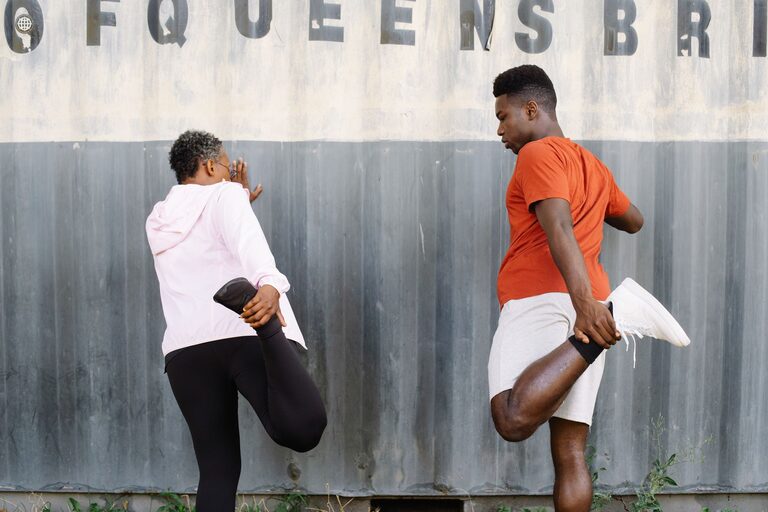
Hold the back of a chair or wall with one hand. Bend one knee and bring your heel toward your seat. Hold your ankle or pant leg with your free hand, keeping your knees close together.
Hold for 15 to 30 seconds, then change sides. If reaching your foot is uncomfortable, skip this stretch or use a lower range of motion.
Calf Stretch
Place both hands on a wall. Step one foot back and press the back heel gently toward the floor. Keep the back leg straight and the front knee slightly bent.
Hold for 20 to 30 seconds, then switch legs. This is especially useful before a morning walk.
Desk and Work Break Routine
Long periods of sitting can leave the neck, shoulders, hips, and legs feeling tight. Try this routine every hour or two, depending on your schedule. You can perform many of these movements beside your desk.
Neck Tilts
Sit or stand tall with your shoulders relaxed. Slowly lower your right ear toward your right shoulder without lifting the shoulder. Return to the center and repeat on the left side.
Hold each side for 10 to 15 seconds. Do not pull on your head or force your neck into a deeper position.
Shoulder Rolls
Lift your shoulders toward your ears, then roll them back and down in a smooth circle. Repeat five to 10 times, then reverse the direction.
Shoulder rolls are simple, but they can help break up long periods of stillness and remind you to relax your upper body.
Chest Opener
Stand with your hands resting behind your back, or place your forearms against the sides of an open doorway. Gently draw your shoulders back and lift your chest without arching your back.
Hold for 15 to 20 seconds. Keep the movement comfortable and avoid pushing your shoulders too far behind you.
Seated Hip Stretch
Sit near the front of a sturdy chair with both feet on the floor. Place your right ankle over your left thigh. Keeping your back long, lean forward slightly until you feel a gentle stretch around your right hip.
Hold for 20 to 30 seconds, then switch sides. If your hips feel tight, keep the raised foot closer to the floor and use a smaller forward lean.
Standing Hamstring Stretch
Place one heel on a low step or the floor slightly in front of you. Keep the extended leg gently straight, then hinge forward from your hips while keeping your back comfortable.
Hold for 15 to 30 seconds and switch sides. Avoid rounding your back or reaching forcefully toward your toes.
Pre-Activity Movement Routine
Before walking, gardening, household chores, or other activities, use moving stretches rather than holding long positions. The goal is to prepare your body without making you feel tired.
Arm Circles
Stand with your feet stable and extend your arms out to the sides. Make small circles, gradually increasing their size. Complete 10 circles forward and 10 backward.
Leg Swings
Hold a wall or chair for balance. Swing one leg gently forward and backward, keeping the movement controlled. Perform 10 swings, then switch legs.
Stay within a comfortable range and avoid using momentum to force the leg higher.
Marching in Place
March gently in place for 30 to 60 seconds. Let your arms move naturally and keep your posture tall. This raises your activity level gradually and helps prepare your hips and legs for movement.
Walking Lunges
Take a comfortable step forward and bend both knees slightly. Push through the front foot to return to standing, then repeat on the other side.
Use a shorter step if needed. You can also hold onto a wall or replace lunges with alternating step-backs.
Evening Stretching Routine
An evening routine can provide a calm transition after a day of activity. Perform these stretches slowly, using a mat or carpet if you prefer.
Child’s Pose Variation
Kneel on a comfortable surface and sit your hips back toward your heels. Reach your arms forward and lower your upper body as far as feels comfortable.
Hold for 20 to 30 seconds. If this position does not feel suitable, rest your hands on a chair and gently hinge forward while standing.
Seated Forward Fold
Sit with your legs extended or slightly bent. Keep your spine comfortably long and lean forward from your hips. Rest your hands on your thighs, shins, or the floor.
Hold for 20 to 30 seconds. The aim is a gentle stretch along the back of your legs, not reaching as far as possible.
Figure Four Stretch
Lie on your back with your knees bent and feet on the floor. Place your right ankle over your left thigh. Keep the position there, or gently draw the left thigh toward you.
Hold for 20 to 30 seconds, then switch sides. Move gradually and keep your shoulders relaxed.
Gentle Spinal Twist
Lie on your back with your knees bent. Allow both knees to lower slowly to one side while keeping your shoulders comfortable on the floor. Turn your head only if it feels natural.
Hold for 15 to 20 seconds, then repeat on the other side. Keep the twist mild and controlled.
How to Build a Consistent Habit
Consistency matters more than intensity. Start with five minutes and add time only when the routine feels easy to maintain.
Try connecting stretching to an existing habit:
– Stretch after brushing your teeth.
– Do a desk routine after a regular meeting.
– Stretch after an afternoon walk.
– Keep a mat near your favorite chair.
– Set a gentle reminder during long periods of sitting.
Pay attention to how each movement feels. A routine should leave you feeling refreshed, not exhausted. If a stretch causes sharp discomfort, numbness, or unusual symptoms, stop the movement and choose a gentler option. When in doubt, ask a qualified fitness professional for guidance.
With a few minutes each day, stretching can become a simple way to support comfortable movement and make everyday activity feel more enjoyable.